Friday, March 8, 2013

Top 10 men's 2013 Spring&Summer trends


Although some parts of the country are covered in snow outside and the only thing you can think of wearing is a winter coat, in the fashion world if you’re not learning about the spring trends and figuring out what new items to add to your wardrobe you’re already late.Now is the time to decide what new trends work for you and what spring colors will best compliment your skin tone.

Here are the top 10 men’s spring fashion trends:


1. Stripes: Stripes are always popular around the fourth of July for a nautical feel but this spring stripes will be more prevalent.


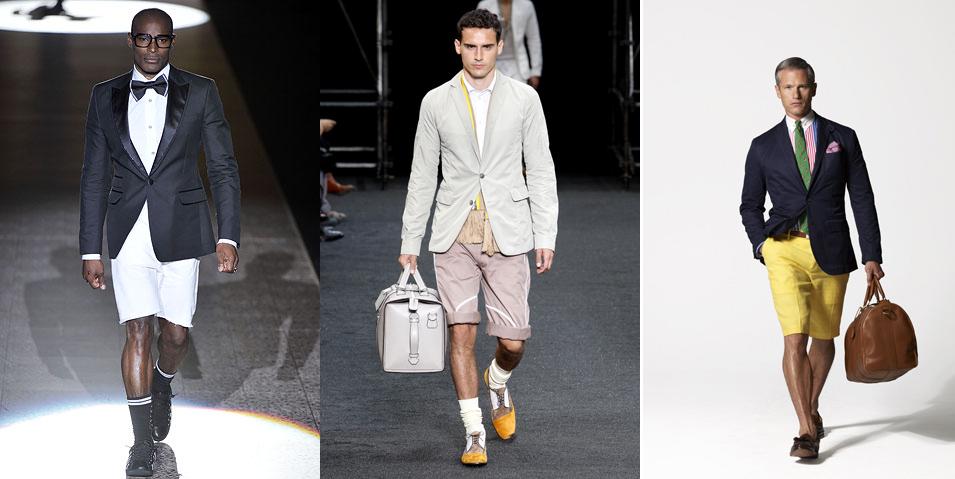
2. Blazers and shorts: This look is not loved by every man at first but once they try it they are instant fans.


3. Bright colors: Dusk blue, poppy red, lemon zest and nectarine (this year’s tangerine) are some of the top color trends for spring.


4. Bold patterns: Bold patterns have been seen all over the runways for spring. The bolder the better and if you’re really daring mix two different patterns in the same color family.


5. Navy suits: The typical black suit or tux has been replaced with navy, courtesy of Tom Ford. It still provides the sophistication you want just with an updated color.


6. Brown: You need a color to offset all the bright colors you’ll be wearing this spring and various shades of brown is the perfect choice.


7. Military: The military trend was huge for women and now it found its place in men’s fashion. Balmain has amazing military inspired jackets that are right on trend.


8. Colored trench coats: Colored trench coats are one of the most exciting spring trends. Try a blue or green trench to add a special pop to your outfit.


9. Slippers: Better known as smoking slippers or the shoes Hugh Hefner wears. Del Toro Shoes makes amazing slippers as well as other shoes in fun colors, textures, and prints.


10. White: White has been and always will be a spring fashion trend for men. Clean and crisp in all white will win every time.


Thursday, March 7, 2013

Men's Color Trends for S/S 2013


It's still winter, but Menswear runways are busy showing  collections for Spring/Summer season.

It looks like designers have really gravitated towards brighter tones, introducing a much forgotten RED.

Also, since men are tending to be shy wearing brights, of course, the neutrals have been introduced in the form of sanded grays, greens and beiges.

Mustard and Sapphire became the brightest leaders in this group, while neutrals like Rust, Indigo and Olive (standard mens' shades) dominated the catwalks around the globe.


Tuesday, March 5, 2013

The Resurgence of the Denim Shirt


Denim shirts are back in style.

If you don’t have one in your closet yet, it’s a worthy investment. Other types of casual shirts are still quite similar in fabric and general aesthetics, but a denim shirt will bring something different to your wardrobe. It will add some variety.

Denim shirts still have the stigma of being primarily worn by people’s dads, but a stylish man can wear items in ways that break their stigma. It’s not the shirts itself that give people the dad-look, it’s the way some people wear them. To prevent you from looking like your old man, you need to understand how to wear a denim shirt fashionably.

For guys, fashion changes at a plate-tectonics pace. So going from a pair of jeans to jeans, a jean jacket and a denim shirt — all in one wearing — can look drastic, in the same way that Brad Pitt's backwoods beard seems a bit much, even in the midst of a facial-hair frenzy.

Denim is a huge, huge way of expressing yourself right now. The trick is you don't want to look like you're wearing the same denim on top as on the bottom. Instead pair a darker and lighter wash, wear a white T-shirt with dark blue jeans, black motorcycle boots and a distressed (lighter blue) old denim jacket.
If you're going to double up on denim, it's safest to keep the color of your top half lighter than the bottom. A darker shirt on lighter jeans doesn't work. It has something to do with the visual center of gravity.
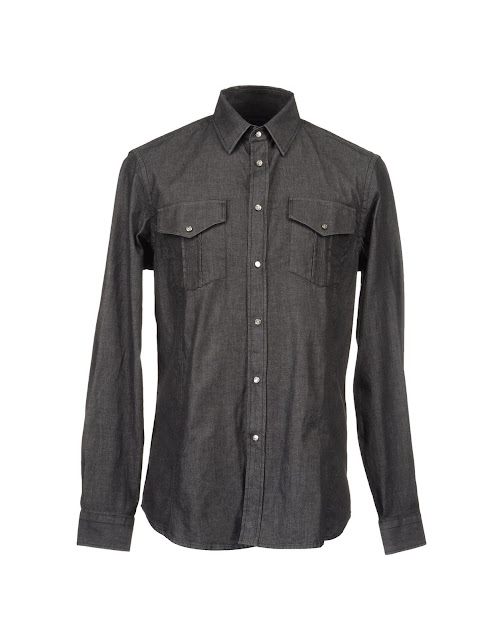
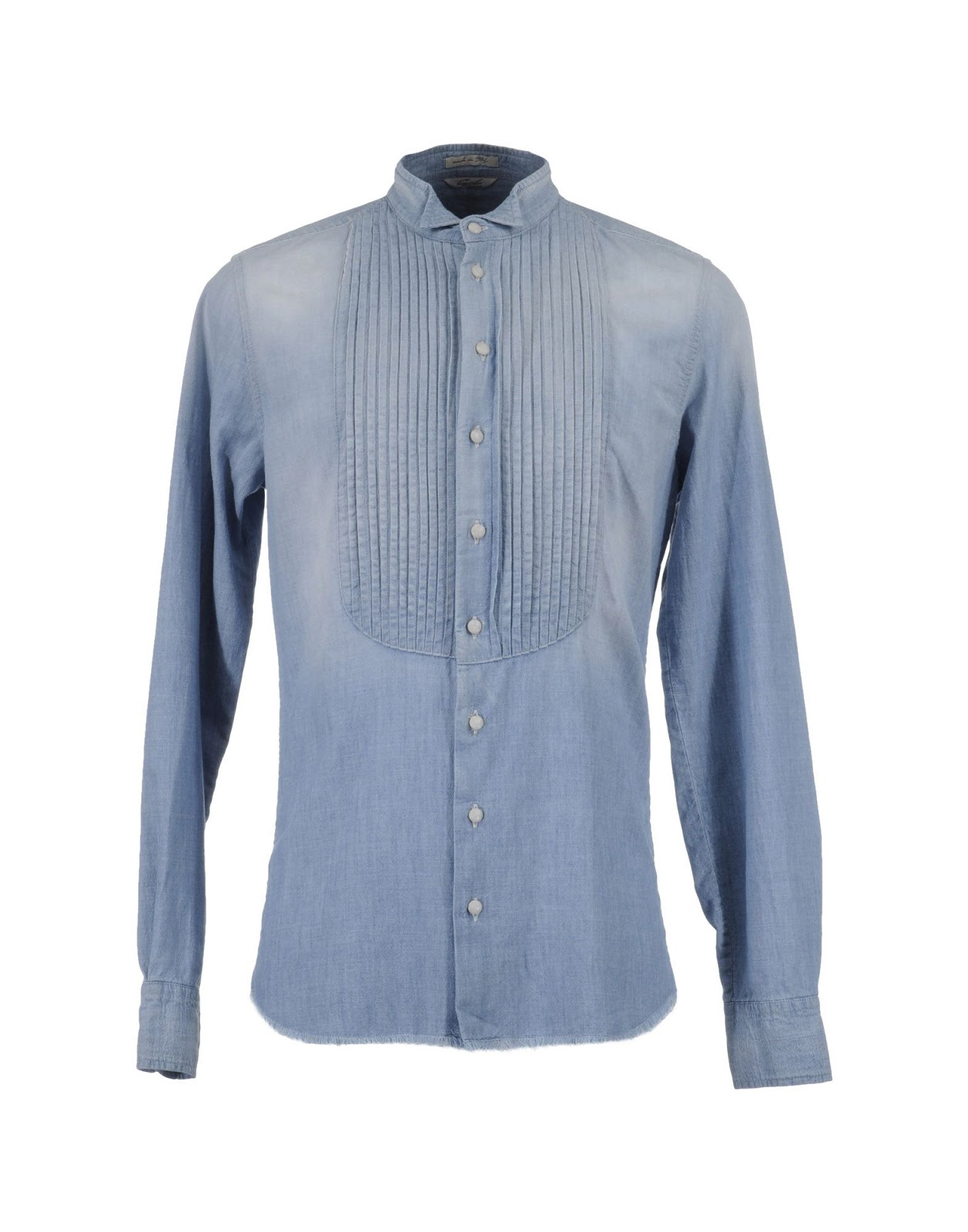
CLASS ROBERTO CAVALLI

CYCLE

JOHN GALLIANO

D & G

DENIM & SUPPLY RALPH LAUREN


Here are a few stylish ways to wear a denim shirt that are quite easy to pull off.

Look 1: Denim Shirt with Chinos

The easiest way to make a denim shirt work is to wear a pair of chino pants with them. Most people only wear denim on their lower half, so this is a great way to turn that look upside down. Seriously, this is a hard look to screw up. Chinos in light shades of brown work especially well with denim shirts, just look at the images above. Also, the open denim shirt look in the middle is awesome for summer/spring.


Look 2: Denim Shirt with Jeans

Wearing a denim shirt with jeans has become quite trendy lately. The double-denim look used to be the fashion faux pas that created the dad-look mentioned earlier. Now, fashion-forward people have made it work. The trick with the double denim look is to make sure there is a contrast between the top and bottom piece. The only way this look works is when one piece is dark denim and the other is light.


Look 3: Denim Shirt with Cardigan

You can still rock your denim shirt in the colder months by adding a cardigan. This will keep you warm, and with the right cardigan, it can look amazing. The denim shirt is enough of a statement piece, so just wear it under a neutral cardigan, and you’ll have an awesome look on your hands. Thick knit cardigans look especially manly with a denim shirt.


These are not the only ways to pull off a denim shirt, but they are the easiest. If you’re new to wearing denim shirts, just try these 3 looks first, and then work yourself up to wearing them with a tie or blazer. Once you’re comfortable with wearing denim shirts, you could even try wearing them with a suit. But that’s a pretty advanced look, and I wouldn’t recommend it to fashion newbies. Remember, just stick to the basics, and you’ll do fine.


Monday, March 4, 2013


Dress Shirts for Men - Formal Doesn't Have to Mean Boring


A proper dress shirt is a button-up shirt with a collar, long sleeves, and wrist cuffs. It is usually made from a cotton fabric woven and dyed into various, non-obtrusive patterns and colors. By altering these characteristics, a dress shirt can either send the message its wearer is ready for sport or ready to meet the president.
A man’s dress shirt can elegantly frame his face during a presentation and later absorb his perspiration during a tough round of questioning. It can play a supporting role by enhancing his sport jacket or it can stand alone and be the centerpiece of his outfit. The dress shirt ranges in price from the $9.99 Wal-Mart polyester special to over $600 for a name brand custom shirt.
A well fitted dress shirt should first and foremost be comfortable; this is different for every man. Larger men are usually complimented by a looser fit while petite and thin men are complimented by a more form cut. In general, though, a shirt should:
  • Allow two fingers in the collar when buttoned.
  • Be tight enough around the wrist so that the cuffs must be unbuttoned to slip them off.
  • Have long enough sleeves so that you can raise your arms like wings and not pull the cuffs down the forearm; they should be short enough so that you don’t have more than 1 inch of fabric bunching near the cuff when your arms hang.
  • Shoulder points that extend to the end of the shoulder and no farther.
  • Have room in the chest and waist to pinch out 1-3 inches of fabric (depending on fit desired).
When you are looking at dress shirts for men, all shirts will fall into one of three categories: Bespoke, Made-to-Measure, or Off-the-Rack. 
  • Bespoke Shirts are completely custom designed for you based on a pattern drawn to fit your exact body size and preferences.  Once your pattern is on file, you can order new shirts any time you want simply by flipping through fabric books.  You have total control and virtually anything you can sketch or describe can be made.
  • Made-to-Measure Shirts are modified based on a set of existing patterns to adjust for your own measurements and limited preferences.  If you have a fairly standard body type with ordinary proportions, there isn’t an enormous difference between made-to-measure shirts and bespoke shirts.  It may or may not be worth the additional money for you to pay for bespoke.  Your pattern adjustments can be kept on file so you can reorder when you find a new fabric you love without needing to get re-fitted.
  • Off-the-Rack Shirts are based on pre-established sizes and limited shirting fabrics, often by neck size / sleeve size for men.  For example, a 16.5/33-34 would be a 16.5″ neck with a 33″ to 34″ arm. 
Once you’ve chosen between bespoke, made-to-measure, and off-the-rack, you need to pick a fit.  The fit you select will depend on your body type and your personal preference.
  • Slim Fit shirts are tailored in the chest, waist, and arms for a closer, sleeker look.  It has nothing to do with being “slim” or “fat”.  If you like your clothes high, tight, and tailored, you probably prefer a slim fit.
  • Extra Slim Fit or Super Slim Fit shirts are a more extreme version of the slim fit.
  • Regular Fit shirts are typically close to a traditional shirting fit with slightly tapered sides.
  • Traditional Fit shirts are cut more like a box.  
The purpose of a shirt collar is to properly balance and frame a man’s face. It’s the most visible part of a shirt when wearing a jacket and because of it’s proximity to the face, plays a very large role in determining the formality and use of the shirt. For this article we will only talk about turndown collars and its two major variants, the point and spread.
  • Point Collars – The most common collar style seen in the US is the point collar; found on 95% of off-the-rack dress shirts, it is cut so that the collar points are reasonably close together with the collar angle being at or less than 60 degrees. The advantage of this collar style is that longer, more closely set points tend to draw the eye down which elongates the face. Unfortunately, most off-the-rack point collars seek the middle ground and do not have a small enough angle or long enough points to reap the full rewards of this effect.
  • Spread Collars – The second style is the spread or “cutaway” collar. These collars have the points “cut away” thus the name, revealing more of the upper shirt area; typically we see these collars with angles greater than 90 degrees. Spread collars are excellent for the gentleman with a medium to long shaped face, as they do the opposite of the point and spread out a man’s features.
In any given day we only speak with a small percentage of the people we see; the shirt you wear, in the absence of a jacket, is the most powerful signal you are using to non-verbally communicate with those around you. Your shirt, whether you like it or not, is speaking for you; make sure it’s saying what you intend.


DRIES VAN NOTEN

DSQUARED2

ALEXANDER MCQUEEN

COMME des GARÇONS HOMME PLUS

DSQUARED2

COMME des GARÇONS HOMME PLUS

DOLCE & GABBANA

JOHN GALLIANO

NEIL BARRETT

VIKTOR & ROLF